







Chrome’s new AI-powered features represent the most significant disruption to search engine optimization since Google’s algorithm updates, with studies showing traffic reductions of 18-70% for informational websites while simultaneously creating new opportunities for brands that adapt their strategies.
Google announced ten AI-powered enhancements to Chrome in September 2025, fundamentally changing how users discover content, consume information, and interact with websites. These changes require immediate strategic shifts from traditional keyword-focused SEO to Answer Engine Optimization (AEO), where brand authority and structured content determine visibility.
Gemini in Chrome: The End of Traditional Page Views
Gemini in Chrome allows users to ask questions about any webpage and receive AI-generated summaries without scrolling through content. This feature rolled out to Mac and Windows desktop users in the United States with English language settings in September 2025, with mobile integration following shortly after.
Traffic Impact: Websites with unclear or long-winded content face the highest risk as Gemini condenses pages into brief summaries. Findings from Cognitive Today show that informational blogs experienced traffic drops between 18% and 60% after AI Mode’s May 2025 launch, with one gardening blog losing 3,000 monthly visits despite maintaining top-three rankings.
SEO Adaptation Strategy: Content must be structured with clear headings, bullet points, and direct answers to common questions. Implementing FAQ schema markup allows Gemini to extract accurate information rather than paraphrasing competitor content. Pages optimized for AI summarization should front-load answers, use simple headers like “What is,” “How to,” and “Why,” and provide direct responses within the first 100 words.
AI Mode in the Omnibox: Bypassing Traditional Search
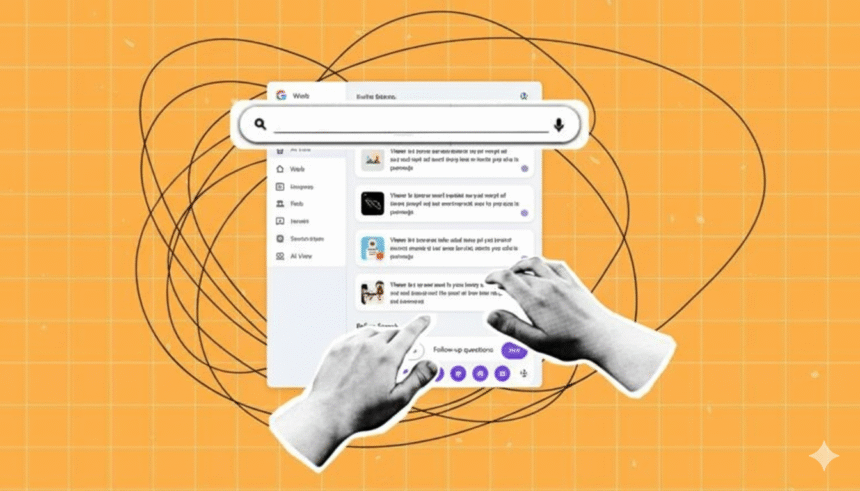
Chrome’s address bar now offers direct access to AI Mode, Google’s most powerful AI search powered by Gemini 2.5. Users ask conversational questions directly in the omnibox instead of navigating to Google.com, receiving synthesized answers with follow-up capabilities.
Traffic Impact: Traditional search clicks decline as AI Mode answers queries within the browser interface. Industry projections suggest AI Mode could reduce site traffic by over 50% as adoption increases. The shift from keyword-based to intent-based search makes keyword stuffing ineffective, as AI Mode interprets user meaning from conversational phrases.
SEO Adaptation Strategy: Optimize content with conversational keywords using question formats: “how do I,” “what is the best way to,” “can you explain”. Answer Engine Optimization prioritizes long-tail, question-based phrases reflecting natural language patterns used in voice search and AI assistants. Tools like AnswerThePublic, AlsoAsked, and Google Search Console’s “People Also Ask” feature identify specific questions audiences search for.
Multi-Tab Comparison: Competing for Citation Visibility
Gemini in Chrome compares content across multiple tabs, consolidating information from competing websites into unified summaries. For product comparisons or research queries, Chrome AI synthesizes insights from several sources, displaying only the most valuable content as bullet points.
Traffic Impact: Generic content without unique insights gets excluded from multi-tab summaries. E-commerce sites face particular challenges, with smaller online retailers experiencing 40% traffic drops as AI Mode prioritizes major retailers like Best Buy in comparison summaries. Websites lacking structured comparison tables, pros/cons lists, or feature breakdowns risk invisibility in AI-generated results.
SEO Adaptation Strategy: Create comparison charts, feature breakdown tables, and pros/cons analyses using structured data. Unique insights not copied from competitors increase the likelihood of AI citation. Implementing schema markup for products, reviews, and FAQs helps Chrome AI extract accurate information. Strong brands with established authority receive preferential treatment in multi-source summaries.
Page Recall: Brand Loyalty Becomes Critical
Chrome’s AI-powered page recall helps users rediscover previously visited websites through natural language queries like “what was that blog I read on back-to-school shopping?”. This feature, launching in late 2025, rewards sites that create memorable experiences.
Traffic Impact: Users who remember brand names, unique content formats, or distinctive design elements return directly through Chrome’s recall feature. Local businesses benefit from increased repeat traffic, with one Seattle coffee shop reporting 25% traffic growth through hyperlocal AI Mode results. Brand search volume becomes more valuable than generic keyword rankings.
SEO Adaptation Strategy: Focus on branding elements including catchy titles, unique visual design, consistent voice, and memorable content formats. Encourage newsletter signups and bookmarking to build direct relationships beyond search dependence. Track brand search volume in Google Search Console and Google Trends to measure brand recall effectiveness.
Enhanced Security: E-E-A-T Becomes Non-Negotiable
Chrome’s AI-powered scam detection using Gemini Nano identifies spammy websites, fake virus warnings, aggressive CTAs, and manipulative tactics. Safe Browsing’s Enhanced Protection mode flags low-quality sites, potentially eliminating black-hat SEO techniques.
Traffic Impact: Sites lacking trust signals face flagging or reduced visibility. Google’s E-E-A-T framework (Experience, Expertise, Authoritativeness, Trustworthiness) determines which content Chrome AI trusts for summaries and citations. For AdSense approval in 2025, E-E-A-T compliance is mandatory, requiring SSL certificates, clean design, transparent About pages, author bios with credentials, cited sources, and fact-checking.
SEO Adaptation Strategy: Implement SSL encryption, create comprehensive About and Contact pages, add author biographies with credentials and experience, cite authoritative sources with hyperlinks, avoid intrusive pop-ups or shady advertising, and use clean, mobile-responsive design. AdSense approval in 2025 requires 15-20 high-quality posts demonstrating expertise, with approval timelines ranging 7-14 business days.
Measuring SEO Success After Chrome AI
Traditional metrics like impressions and click-through rates provide incomplete pictures as AI answers replace organic clicks. The new priority measurement framework focuses on quality over volume.
| Metric | Why It Matters | Measurement Tool |
| Brand Search Volume | Users searching for your brand name indicate recall and loyalty | Google Search Console (filter brand queries), Ahrefs, SEMrush |
| Direct Traffic | Users bypassing search engines to visit your site directly | Google Analytics 4 → Acquisition → Direct |
| Return Visitors | AI recall features drive repeat visits from engaged users | GA4 → Retention & returning users |
| Engagement Time | Fewer clicks but longer sessions indicate higher-value traffic | GA4 → Engagement rate & average engagement time |
| Conversions & Leads | Ultimate proof of success through sales, signups, email subscribers | GA4 Events, CRM integration |
| AI Content Citations | Visibility in Gemini summaries and AI Mode answers | AlsoAsked, AnswerThePublic, AI SEO trackers (Surfer, Clearscope) |
The formula for SEO success shifts from Rankings + Impressions + Clicks to Brand Recall + Engagement + Conversions. Traffic volume may decline, but conversion rates typically increase as visitors who bypass AI summaries demonstrate higher purchase intent.
Answer Engine Optimization: The New SEO Standard
Answer Engine Optimization (AEO) prepares content for AI-powered discovery rather than traditional search engines. AEO strategies differ fundamentally from keyword-focused SEO.
Research Question-Based Queries: Use tools like AnswerThePublic, AlsoAsked, and Google Search Console to identify specific questions audiences ask. Prioritize high-intent queries beginning with “how,” “what,” “why,” “best way to,” and “can you”. Organize questions by topic clusters and user journey stages.
Optimize Content Format for Direct Answers: Structure content with H2/H3 headers that mirror natural questions. Provide concise answers in the first paragraph, followed by detailed explanations. Use bullet points, numbered lists, and tables for easy extraction by AI systems.
Implement Technical SEO for AI Discovery: Schema markup for FAQs, How-Tos, Articles, and Products helps AI engines extract structured information. Internal linking establishes topical authority across content clusters. Mobile optimization and fast page speed ensure AI crawlers access content efficiently.
Build Topical Authority for Citations: Create comprehensive content covering topics in depth rather than surface-level articles. Establish expertise through consistent publishing in specific niches. Earn backlinks from authoritative sources to signal trustworthiness to AI systems.
Diversify Traffic Sources: Reduce dependence on Google Search by building social media presence, email newsletters, and community engagement on platforms like Reddit. Multi-channel distribution protects against AI-driven traffic declines.
Conclusion: Adapting to Chrome’s AI-First Era
Chrome’s AI integration fundamentally transforms search behavior, but SEO is evolving rather than ending. Websites that treat traffic declines as failure miss the strategic opportunity: fewer visitors with higher conversion intent represent more valuable audiences than high-volume, low-engagement traffic.
The critical shift requires moving from keyword-focused content to Answer Engine Optimization strategies prioritizing conversational queries, structured data, and topical authority. Brands that build strong E-E-A-T signals, implement schema markup, and create unique insights not easily replicated by AI summaries will dominate citation-based visibility in Gemini responses.
Success metrics must reflect this new reality: brand search volume, direct traffic, engagement time, and conversion rates matter more than impression counts and click-through rates. Google’s official guidance emphasizes creating unique, non-commodity content that provides genuine value beyond what AI can synthesize.
The marketers who adapt quickly gain competitive advantages over those clinging to outdated tactics. Chrome’s AI features reward clarity, authority, and user-centricity—principles that have always defined effective digital marketing. Websites investing in comprehensive content, transparent trust signals, and multi-channel distribution will thrive as AI reshapes the search landscape, while those relying solely on traditional SEO face increasing marginalization.
The question is no longer whether to adapt to Chrome AI, but how quickly adaptation begins.
Frequently Asked Questions: Chrome AI Features and SEO Impact
How does Chrome’s Gemini integration affect website traffic?
Gemini in Chrome summarizes webpage content directly in the browser, reducing the need for users to scroll through full pages and potentially decreasing time on site by 40-60% for informational content.
What is AI Mode in Chrome’s omnibox?
AI Mode allows users to ask complex questions directly in Chrome’s address bar and receive AI-generated answers powered by Gemini 2.5 without visiting external websites, fundamentally changing search behavior patterns.
How can websites get cited in Chrome AI summaries?
Websites with strong E-E-A-T signals, structured data markup, clear headings, unique insights, and topical authority have the highest likelihood of citation in AI-generated summaries and multi-tab comparisons.
Will traditional SEO become obsolete with Chrome AI?
Traditional keyword-focused SEO evolves into Answer Engine Optimization (AEO), where conversational keywords, question-based content, brand authority, and user intent matter more than keyword density.
How do I measure SEO success after Chrome AI rollout?
Focus on brand search volume, direct traffic, return visitors, engagement time, and conversions rather than impressions and clicks, as traffic volume decreases but visitor quality increases.
What content types perform best with Chrome AI features?
In-depth analysis with unique insights, comparison tables with structured data, local business content with schema markup, and experiential content difficult for AI to replicate perform best.